Blog

Redwoods and Material Memory, with Nicole Kang Ferraiolo

Note: this blog is reposted from the CLIR Grants & Programs Fall 2020 newsletter, released November 18.

The second season of CLIR’s podcast Material Memory delves into the impact of the climate crisis on communities and their cultural heritage. We asked host Nicole Kang Ferraiolo, Director of Global Strategic Initiatives at CLIR, about the inspiration behind the imagery for this season.

How did your own experiences inform your interest in hosting this season and shaping it around the intersection of climate and memory?

A photograph of redwood trees taken from a low angle
Trees in Northern California. Photo by Nicole Kang Ferraiolo.

Climate change is the biggest challenge facing humanity and many of us at CLIR have been thinking about the role of the library and cultural heritage field in responding to the crisis. Initially, I thought of the podcast season as a sort of literature review of what the field is doing to address the climate crisis and what work remains. There’s certainly a lot of that, but as the interviews unfolded, we found that the season was also about the bigger questions of what is culture, why it matters, and how cultural memory relates to issues of equity, power, and social justice. 

Hosting this season has been particularly rewarding for me, since it plays to many of my personal interests and pursuits over the past decade. When I was in graduate school, I wrote my dissertation on a hurricane relief effort in 1899 Puerto Rico and have maintained an interest in the social and political context of disasters. Around that time, I was also doing some work in radio on the side and listening to an obscene amount of podcasts. I seriously considered pursuing it as a career, but the fate of radio and podcasting was less certain back in the early 2010s and I was worried about my student loan debt. Instead, I took a job managing an interdisciplinary research program focused on climate change and global governance. I don’t think my twenty-something-year-old self would have believed you if you’d told me that in my next job I’d get to work on a podcast about climate change and archives! And honestly, it’s been so much more rewarding than I even imagined.

as the interviews unfolded, we found that the season was also about the bigger questions of what is culture, why it matters, and how cultural memory relates to issues of equity, power, and social justice.

The people I interviewed were so thoughtful and forthcoming on a difficult topic, and working with them has helped me process my own climate anxiety and channel it toward meaningful action. We have some incredible guests and I can’t wait to share these conversations with listeners. 

Why did you feel redwoods captured your vision for this series? What inspired you to select them as the cover image and visual metaphor for the season?  

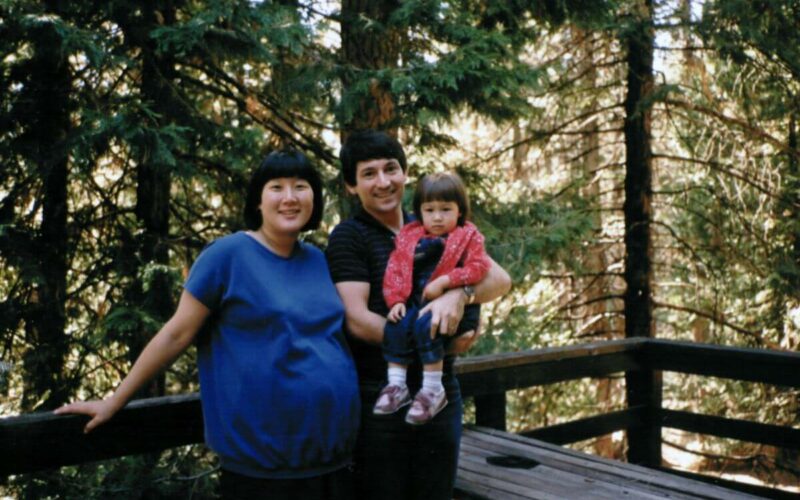
In a photo from the 1980s, a family poses among trees.
The Kang Ferraiolo family. Nicole Kang Ferraiolo age 1.5, her younger sisters (twins) on the way.

I grew up in Northern California and over the summer I watched from across the country as my home state burned. One of the places the fires consumed was Big Basin, a state park known for its giant redwoods and sequoias, and the place I used to go camping with my family as a kid. Although the park was devastated, the ancient trees appear to have survived, as they have for thousands of years. To me there is a metaphor here about memory and resilience, which is a recurring theme in the season.

The redwoods were also fitting for the podcast because they form communities that support each other. New trees grow out of the roots of old trees, and they grow in “fairy rings” that put the trees in conversation with each other across the generations. 

Three images including a family posing in front of tall trees, a little girl crouched in a field, and a mother and son posing in the woods
CLIR families among the redwoods. From left to right, Kathlin Smith’s family at Humboldt Redwoods State Park in 2015, Jodi Reeves-Eyre’s daughter stops to admire flowers in 2020, and Nicole and her son in 2019.

The trees are also storytellers: I have vivid memories of seeing the deep fire scars in the redwoods as a young child, their histories written into their trunks. It’s the first time I was moved to empathy for a plant. Finally, these old trees are climate superstars and take ridiculous amounts of carbon out of the atmosphere. I love that these living monuments that are older than the Roman Empire and the Qin Dynasty are fighting the climate crisis by simply continuing to exist.

When should we look out for the podcast, and where can we find it?

You can subscribe to the podcast on your preferred platform or listen to it directly on the Material Memory website. The trailer and the first two episodes of the season were released during the DLF Forum and affiliated events (November 9-13, 2020).

Thank you, Nikki! We’re looking forward to hearing the rest of the series. 

What the Past Knows

—Abby Smith Rumsey

CLIR’s Material Memory podcast series explores ways in which collective memory and the organizations entrusted with its stewardship are experiencing the disruptions of rapid technical innovation, accelerating climate change, armed conflict, mass movements of population, political and legal regimes that hamper access to culture, and the unintended ravages of simple neglect. The series will highlight efforts that memory institutions are taking to safeguard our heritage despite these odds. Season One focuses on people who are countering these effects by reformatting and sharing the threatened musical and oral traditions of indigenous cultures, as subjects tell their own stories of loss, recovery, and hope.

Material Memory begs the question: Why should we care? What good is the past in the present age of unprecedented challenges? What, if anything does the past have to tell us about mass dislocations, racial and economic inequality, human trafficking, political censorship, or climate change? Why devote precious resources to securing the persistence of collective memory? These are reasonable questions, and they demand an answer.

As a historian, my response is that these challenges are not unprecedented. On the contrary, coping with unpredictable and unwelcome catastrophic change to our physical and cultural well-being is how humankind has come to dominate the lands, the seas, and the skies. Furthermore, these disruptions have always been both natural and human made. That we have survived them and prevailed is due to the steady accumulation and sharing of hard-won knowledge. Collective memory tells us how to build a home out of snow; how to distinguish poisonous plants from medicinal ones; how to perform an appendectomy safely; and how to inoculate against deadly infections. Stewardship of that knowledge is a matter of life and death.

Memory that accretes knowledge over time is the key to our personal survival. Each of us has an immune system that commits to memory every encounter with a pathogen, so that we may mount a timely defense against the next assault. By the same token, individuals accumulate knowledge of themselves and their environment at every stage of their lives. This knowledge allows us to anticipate threats, recognize rewards, and engage in problem-solving through imagining various future scenarios and predicting probable results. Through autobiographical memory, we know who we are, where we come from, and what the future may hold for us. If for some reason we should lose our memory, through physical injury, psychological trauma, or dementia, it is not just the past that we lose. Given that imagination is memory transposed into the future tense, amnesiacs lose their ability to imagine. Without imagination they cannot solve the problems they face today or anticipate and prepare for those to come. When communities lose their history, they, too, lose their sense of identity and find it difficult to summon up hope for their future.

Like a good pair of glasses, knowledge of the past corrects our myopic sense that we face challenges that are unprecedented and therefore unsolvable. Problem-solving requires access to trustworthy facts and vast reservoirs of imagination and patience. It is our imagination, seated deeply within the repertoire of knowledge that cultures carry, that generates possible futures.

This season’s podcasts will share stories of people who are reaching deep into their community’s past to find, secure, and share the knowledge that has sustained them. The future of that knowledge—knowledge that is necessary to solve tomorrow’s challenges—depends upon each generation providing stewardship. Those who lament the scale of today’s challenges and insist that they are unique will discover that it is not the scale of the problems that matters, but the scale of the response to them. The richness of our cultural memory is itself testimony to how successful humankind has been in managing this precious knowledge. It is proof that our future is born of what the past knows.

Abby Smith Rumsey is a historian of ideas focusing on the creation and use of cultural memory.

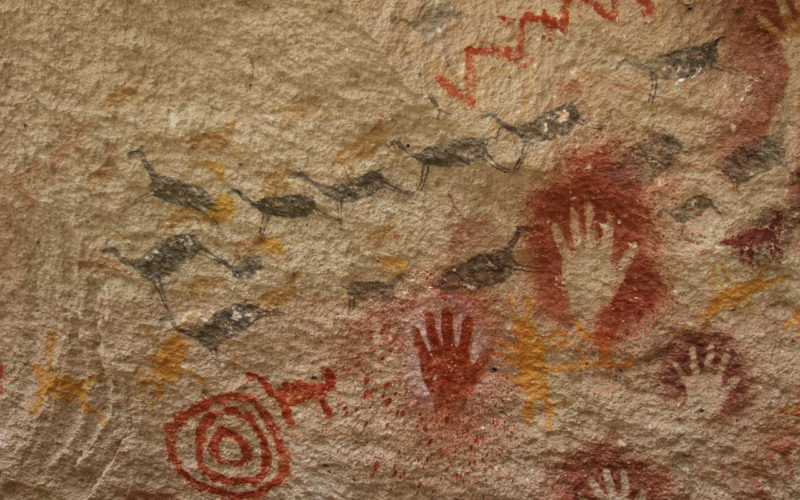
Detail from Cueva de las Manos, Rio Pinturas, Argentina. The wall art dates from 13,000 to 9,000 years ago. The site was entered on the UNESCO World Heritage List in 1999.
Skip to content